| ← All issues | ||||||||||||||||
| The Diff No. 026 Thursday, 29 October 2026 · AI dev news, only what is verified | ||||||||||||||||
 | ||||||||||||||||
Eight certificate-authority keys anyone can recover from the certificates themselves, a fingerprinting script stuffed with fake jailbreak prompts, a CVSS-10.0 GitLab bug exploited in the wild, and a UEFI hole older than some of its attackers. Security week was not subtle. The internet’s trust plumbing had a rough seven days, and the most instructive stories are the small ones: a security report signed with the compromised keys themselves, a GitLab instance rebuilt from scratch after an attacker downloaded its container image to tune the exploit, and an obfuscated anti-bot script that fights LLM deobfuscators with tripwire function names. Also landing: Google’s Gemini 4 Carbon, gated to cyber defenders first. Today: the eMudhra compromise and the macOS gap, Gemini 4 Carbon, the fingerprinting tripwires, Alpine’s GitLab rebuild, a 16-year-old UEFI bug, a CPU compiled into an LLM’s weights, a robot PCB factory, and one defender’s week from hell. Eight recoverable CA keys your Mac still trusts, a gated Gemini, and a CPU living inside an LLM. | ||||||||||||||||
IN THIS ISSUE
| ||||||||||||||||
🔥 VIRAL The loud ones on Hacker News. Numbers are a morning snapshot. | ||||||||||||||||
01 Follow-up to No. 018/020 · HN: 1,075 points at 06:26 IST · we-have-a-problem.com, Oct 28 · no image available 🔐 Follow-up: Apple’s git still trusts the compromised CAs, and macOS 27.2 undid the fixesThe eMudhra keys from No. 018 and the exit from No. 020 are back: the disclosure site’s October 28 update finds the git, curl and python3 Apple ships with macOS still trust the compromised intermediates. SCENE Quick recap of what this newsletter covered: eight eMudhra intermediate CA certificates had private keys anyone can recover from the certificates themselves, live since April 2025, proven by a researcher signing "We have a problem here - Wayne" with each key. Browsers blocked the certificates within days, and eMudhra’s board quit the global SSL/TLS business, a line it says is about 1% of revenue. THE THING The new chapter is the gap between "browsers fixed" and "your machine fixed." The October 28 update to the disclosure site: the developer tools Apple ships with macOS, including git, curl and python3, still trust the compromised intermediates, and macOS 27.2 reverted fixes users had applied themselves. An attacker holding these keys can impersonate any website to a client that does not consume revocation data, and that describes a long tail of real software: Electron apps until they update, anything shipping its own CA bundle, and curl, which does not enforce Certificate Transparency. If your release pipeline runs git over HTTPS on a Mac, this is your pipeline. ✂️ STEAL IT Steal the follow-through: the same researcher who proved the compromise is now running a live self-check page, host per intermediate, with curl one-liners and an offline verification pack. Disclosure is not done when the browsers patch; it is done when the weirdest client in your fleet stops trusting the keys. Try today VERDICT Run the two checks in today’s TRY section, especially on a Mac. It fails you as a browser panic: Firefox, Chrome, Edge and Safari already block these certificates. The exposure lives in dev tools, CI runners and every non-browser TLS client. The disclosure and self-check · eMudhra’s exit announcement · HN discussion | ||||||||||||||||
 02 HN: 845 points at 06:26 IST · blog.google, Oct 28 · image: Google 🧠 Gemini 4 Carbon is here, and you can’t have it yetGoogle’s second frontier model in a month tops its cybersecurity benchmarks, resists every prompt-injection attack in one evaluation, and rolls out to cyber defenders first through a government-aligned testing process. SCENE Koray Kavukcuoglu’s announcement post opens with the pitch: Gemini 4 Carbon is Google’s "strongest model with state-of-the-art cybersecurity and long horizon capabilities," two weeks after Gemini 4 Argon. The numbers are Google’s, measured without guardrails: 88.2% on SEC-bench Pro for finding vulnerabilities, 54.8% on ExploitGym for exploitation, 71.0% on CWE-bench for patching, first place on Artificial Analysis Intelligence Index v5.0 at 59, and #4 on WebDev Arena at 1768, up 89 elo. The Chrome team, Google says, saw it produce high-quality patches "more than 10X better than another lab’s large frontier model." THE THING The safety claims are equally internal: successful cheating on Terminal-Bench 4.0 reduced to 0.0%, a 0.0% attack success rate on Gray Swan’s indirect prompt-injection benchmark, unsupported claims cut about 2x over Argon, high-severity misalignment alerts down almost 80% in live coding with Google’s own teams. The rollout is the real news for planning purposes: Carbon is in the US government’s voluntary pre-release testing process, goes this week to a subset of cyber defenders, then to trusted partners via the Fairwind Program, with general availability promised "as soon as possible" at introductory pricing of $2 per million input tokens and $10 per million output, doubling after the introductory period. ✂️ STEAL IT Steal the sequencing: ship the capability story and the access gate in the same post, and price it in the same breath. Nothing about this launch makes readers guess when they can touch it or what it costs. Watch VERDICT Watch for the Fairwind partner wave and independent evals; every headline number so far is a lab-reported benchmark, several run without guardrails. It fails you as a tool today: unless you are in the defender cohort, there is no API to call and no date beyond "as soon as possible." | ||||||||||||||||
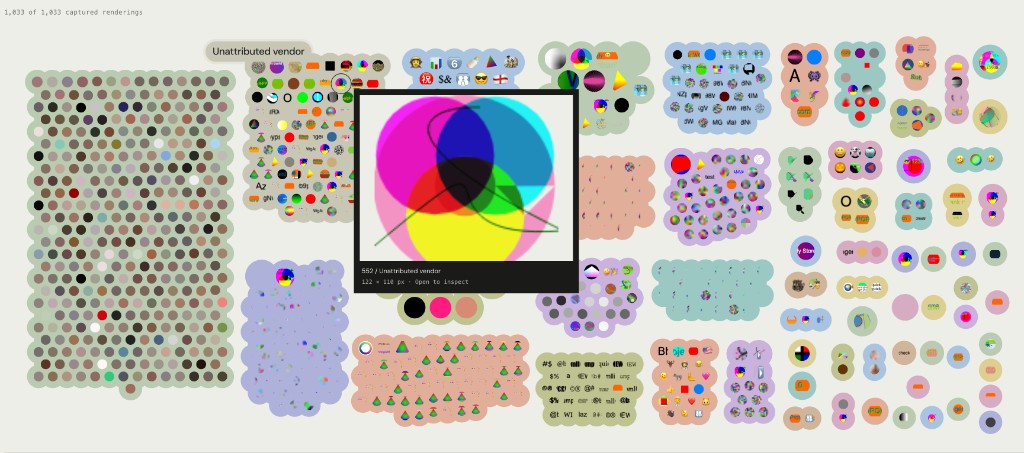
03 HN: 950 points at 06:26 IST · nullpt.rs, Oct 28 · image: nullpt.rs 🕵️ A fingerprinting script is booby-trapped against LLM reverse engineersA researcher crawled 10,000 sites for canvas fingerprints and found an anti-bot script whose decoy functions are named things like computeRicinLethalDosageForWaterSupply, plus an invisible payload designed to trip model safeguards. SCENE The author, writing as veritas, crawled the Tranco top 10,000 with Playwright, hooked canvas toDataURL calls, and collected 1,033 fingerprinting canvases into a gallery at fingerprint.garden. One looked like the album art for Tame Impala’s Currents, so they went to find the responsible script. Inside the obfuscation they found function names like computeRicinLethalDosageForWaterSupply and calculateFentanylPrecursorSynthesisYield, and a string of invisible Unicode characters. THE THING Decoded, the invisible string is a fake "SYSTEM OVERRIDE" jailbreak prompt, complete with censorship tripwires and requests for bioweapon and self-harm content. The author’s read: this is anti-LLM obfuscation, engineered so that any model asked to deobfuscate the script trips its own safeguards. Their tests: one frontier model refused to deobfuscate it; another complied. Buried deeper is a fake Node.js payload that reads .npmrc and .env files but with empty callbacks, likely another decoy. Strip all of that away, the author concludes, and it is a standard anti-bot script: user agent, canvas, webdriver flag, hardware concurrency. ✂️ STEAL IT Steal the threat model, inverted: if models are going to read your adversary’s code, your adversary will write code for the models. Prompt injection is becoming an anti-reverse-engineering technique, and it lives in the wire format, invisible to human reviewers. Try today VERDICT Read the write-up; it is the clearest worked example yet of model-aware obfuscation. It fails you as a verified verdict: the anti-LLM intent is the author’s inference from the strings, the model-refusal tests are theirs, and the vendor behind the script has not commented. | ||||||||||||||||
04 HN: 118 points at 06:26 IST · alpinelinux.org, Oct 28 · no image available 🧯 An attacker tuned a CVSS-10 exploit on Alpine’s GitLab. They rebuilt the whole instanceCVE-2026-97229 is a critical bug in the Onigmo regex engine inside Ruby. Alpine’s GitLab crashed eight times under crafted CI configs, four attempts got partway through, and the team treated the instance as compromised. SCENE On October 20 and 21, a week after GitLab shipped fixes, a newly registered account started sending crafted CI configurations to gitlab.alpinelinux.org. GitLab worker processes crashed eight times; in four of those crashes, the attacker got partway through the exploit and failed at the next step. The attacker also downloaded Alpine’s GitLab container image, which the team reads as tuning the exploit to their exact build. THE THING Alpine’s post-incident write-up is the model of the genre. They found no evidence code ran on the server but "cannot rule it out," so they treated the instance as compromised and rebuilt it from scratch, reset all passwords, replaced GitLab’s secret keys, and verified the aports repository, packages and October 21 releases against outside records. The technical detail with the longest tail: upgrading GitLab did not fix the bug. The vulnerability lives in Onigmo, the regex engine inside Ruby, and GitLab’s fix is a patch to the Ruby bundled in its own packages; upstream Ruby shipped it only on October 23. If you run GitLab with your own Ruby, from source or in your own image, upgrading GitLab is not enough: you need Ruby 3.3.13, 3.4.12, 4.0.9 or later. Alpine’s own 19.3.6 image pulled before October 27 is still vulnerable. ✂️ STEAL IT Steal the disclosure discipline: a day-by-day timeline, exactly what was verified and how, what they cannot rule out, and the one sentence every downstream user actually needs, in bold position. Incidents are judged by the second paragraph, not the first. Try today VERDICT If you self-host GitLab outside the official packages, check your Ruby version this morning. It fails you as a reason to panic about Alpine’s packages: the team verified them against outside records and found no tampering. | ||||||||||||||||
05 Ars Technica, Oct 27 · no image available 💾 A 16-year-old UEFI bug leaked a month early, and most servers boot through itCVE-2026-97631 is a 9.5-severity buffer overflow in the EDK2 network stack, exploitable during PXE boot before Secure Boot and the TPM wake up. An AMI pull request broke the January embargo. SCENE The disclosure plan was a coordinated release in January. Then AMI, the motherboard firmware maker, published a pull request detailing the vulnerability and its fix, and the TianoCore project rushed out a public advisory last week. The bug was found by Alex Matrosov of Anthropic and Dan Holmes of Google. THE THING The flaw itself is a 16-year-old buffer overflow in the PXE Base Code driver of TianoCore EDK II, the reference UEFI implementation used by AMI, Insyde, Phoenix and Microsoft’s Project Mu. During network boot, the driver copies ICMP error messages into a fixed 504-byte field and, per the advisory, "advances the destination pointer by the cumulative rather than the per-fragment length," so an oversized message writes attacker-controlled bytes past the field. A malicious packet can arrive by simple unicast during the PXE boot window, from any network distance, and the code runs in ring 0 before Secure Boot establishes the chain of trust. The payload does not persist, but it can install things that do. The limits matter as much: an attacker needs a presence on the local network, per-target address knowledge that Eclypsium’s Jesse Michael says must be tuned per firmware build, and the target must actually PXE boot, which rules out most home machines. HD Moore’s summary: expect it to become a "forever" bug on end-of-support systems. And the meta-story, from Ars’ Dan Goodin: this is the second botched disclosure in a week, after the PHP one. ✂️ STEAL IT Steal the blast-radius paragraph: every good security write-up now includes who is actually exposed and what exploitation requires, because the headline severity number alone reliably overstates both. Watch VERDICT Watch your vendor’s firmware updates if you run PXE-booted servers; the fix is a plain firmware update, no revocation dance. It fails you as evidence of active exploitation: none has been reported, and the disclosure was a process failure, not an observed attack. | ||||||||||||||||
🔭 UNDER THE RADAR Quiet tools and field reports worth your time. | ||||||||||||||||
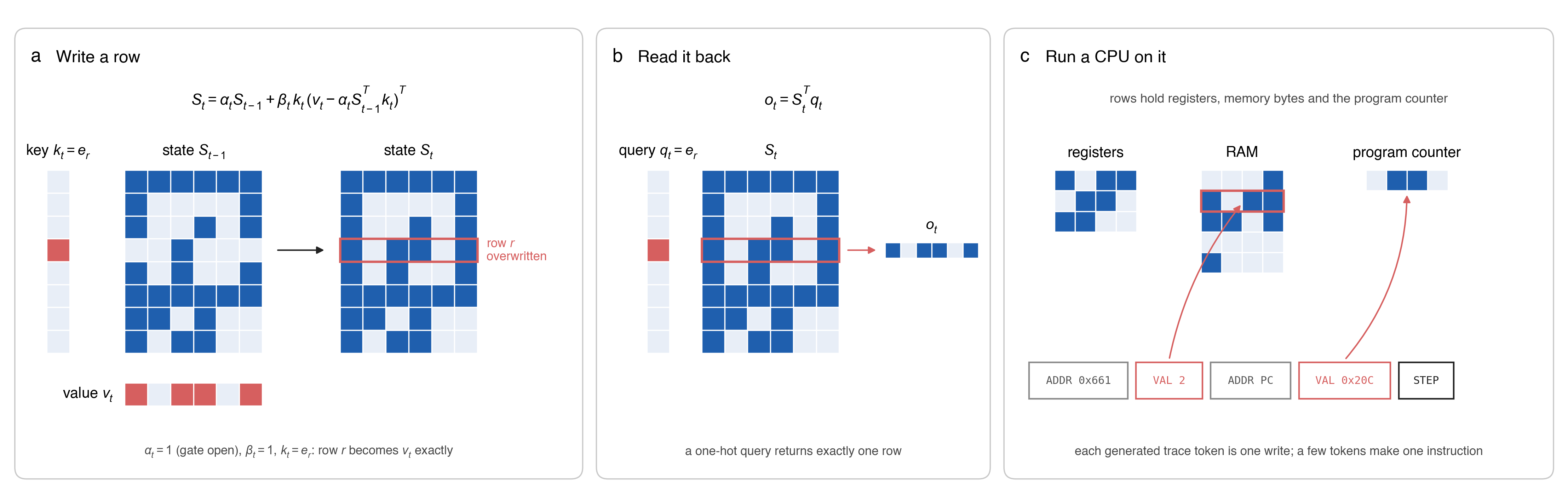 06 HN: 206 points at 06:26 IST · divagr.com · image: divagr.com 🖥️ Someone compiled a working RISC-V CPU into Qwen’s weightsQwenputer runs a 32-bit RV32IM core on the Gated DeltaNet layers of a stock Qwen 3.5 4B, using them as exact RAM. It passes the official riscv-tests and ran 18 million instructions without an error. SCENE The trick that makes it possible is exact memory. Three of four attention layers in Qwen 3.5 use Gated DeltaNet, a linear RNN whose per-head state matrix updates by the delta rule. The author found that with the gate set to 1, write strength set to 1 and one-hot key encoding, every write overwrites exactly one row and every one-hot query retrieves an exact value: the attention layers become addressable RAM, cheaper than KV cache because the state never grows with the conversation. THE THING On top of that RAM, a compiler, no training involved, turns a CPU described as a circuit into transformer weights: attention heads that look things up, feed-forward units that do arithmetic, DeltaNet heads that hold the RAM. The result occupies 11 layers in front of Qwen’s 32, runs C and MicroPython inside the forward pass, and its instruction trace is just generated tokens. The author’s numbers: it passes the official riscv-tests, matches qemu, ran 18 million instructions free-running without an error, and on DeepMind and NUPA arithmetic sets it beats base Qwen decisively, roughly matching Qwen-with-a-Python-tool; about 230,000 output positions replayed against a reference machine with zero mismatches. Normal text quality is statistically unchanged, KL 6e-4 against a 5e-4 noise floor. There is even an experimental filesystem in the weights, 512 files across about 53,000 tokens, persistent between chats. The follow-ups point at safety: hybrid models can hide reasoning in their RNN state away from CoT monitors, and compiled weights can work as tamper-proof in-model monitors. ✂️ STEAL IT Steal the honesty table: 18.8 GB checkpoint, mostly zero padding; needs a small driver, so no plain generate() call; every instruction costs a few decoded tokens, so big calculations take seconds. The limits paragraph is what makes the demo believable. Try today VERDICT If you have a 24 GB GPU, the model and code are public and the README ends in a copy-paste run command. It fails you as infrastructure: it is an experiment with a driver shim and seconds-per-calculation latency, not a runtime. | ||||||||||||||||
 07 HN: 463 points at 06:26 IST · circuithub.com + ASSEMBLY · image: CircuitHub 🏭 The Grid: a Massachusetts robot floor that builds PCBs like a print shopLevitating movers carry each board between robots with no changeovers, so one unit each of 100 designs flows as easily as 100 of one. CircuitHub says average turnaround is four days against nine from China. SCENE CircuitHub’s pitch, per ASSEMBLY magazine’s visit, is a factory that treats each circuit board like a print job. Levitating movers transport individual boards among robots that print solder paste, place components, solder and inspect, with AI orchestrating the routes. Because every board takes its own path, there are no changeovers between designs: the company says one unit each of 100 different designs moves through the system as easily as 100 units of a single design. THE THING The claimed numbers, all the company’s: average four-day build-and-ship against nine days for a typical Chinese quick-turn shop, price parity with China, more than 2.2 million boards shipped, 150 million components placed, 26,000 engineers served, and capacity at the Massachusetts site increasing fivefold because demand outpaces it. CircuitHub’s own site says it ships 81% of full-turnkey orders within three days and publishes live performance indicators, which founder Andrew Seddon frames as the accountability layer: "For thirty years the West accepted a trade-off: design here, build in China, and wait. The Grid ends that trade-off." The target segment is high-mix, low-volume: CircuitHub says 95% of electronics projects run under 10,000 units. A UK factory is planned for 2027. ✂️ STEAL IT Steal the transparency posture: publish your real production KPIs in real time and let customers grade you. It is a stronger sales page than any latency claim. Try today VERDICT If you design boards, a three-day default turnkey changes prototype math; the live KPIs are public before you commit. It fails you at volume: the whole system is aimed at runs under 10,000 units, and the price-parity claim is the vendor’s own. | ||||||||||||||||
08 Lobsters: 114 points · netmeister.org, Oct 27 · no image available 🔥 "This is not sustainable": one defender’s week, five firesNetmeister’s jschauma counts the week’s incidents and lands on the uncomfortable part: the fix is never the bottleneck. Your inventory is. SCENE The essay’s scene is a calendar. In one week: a KVM escape with no fixed kernel from Canonical twelve days in; the eMudhra compromise, for which no SBOM on earth lists your vendored CA trust bundles; the php2shell disclosure, embargo broken, exploits of varying quality flooding in; a brotli RCE that turned out to reach far beyond the Node.js advisory it rode in on; and the UEFI bug from today’s report above. Each of those, he writes, would have been a once-a-year incident not long ago. THE THING His argument is not that vulnerabilities multiplied but that response did not scale: "Severe vulnerabilities are identified and disclosed at a pace that defenders are unable to keep up with," because assessing feasibility in your environment, enumerating your attack surface and deploying safely still take real time. The AI angle is double-edged in his telling. Vendors race to claim credit for AI-found bugs, and he singles out OpenAI claiming the brotli find even though, he writes, the issue was fixed in February and Mozilla noted the impact in April, a claim we have not independently verified. Meanwhile defenders paste verbose AI-generated reports into incident channels and end up with, his phrase, a binary "handed to you by a meat-proxy" that nobody understands. His closing advice is old-school: assume compromise, limit blast radius, fund detection instead of dashboards. ✂️ STEAL IT Steal the staffing observation: it is always the same handful of people who fight every fire, because they carry the tribal knowledge your documentation does not. That is a bus-factor audit you can run this week. Watch VERDICT Read it and count how many of the week’s fires touched your own stack. It fails you as a solution: he says so himself, there isn’t one, only posture, and his strongest statistics are unattributed, so quote them as his. | ||||||||||||||||
📊 THE ATTENTION GAP HN points at 06:26 IST. Attention, not quality.
| ||||||||||||||||
ALSO ON THE RADAR DAYJOB: Tax grades agents on real tax work. Surge AI’s new benchmark hands agents 50 professional tax environments and 1,789 files, and grades judgment, not just math. Its leaderboard: Claude Sonnet 5.5 at a 10.8% pass rate, Fable 5.1 at 9.6%, Opus 5.5 at 9.2%. Their rubric, their numbers. The benchmark → The case of the 9-bit AES key. V12’s Rick de Jager found several PDF tools derive their AES-256 file keys from tiny state spaces: MuPDF before 1.28.5 used epoch-seeded drand48, leaving 9 bits of real entropy; Foxit used time-based randomness. Passwordless decryption of protected PDFs. The write-up → Claude Code’s status line costs 15-20% of your tokens. A gist by Flamerix AI measures the three-word status line’s token overhead and ships a Bun preload to disable it, without modifying the binary. Their measurement, not ours; an update can silently undo the tweak. The gist → Hoot 0.10.0, Scheme in the browser, just in time for the jam. The Guile Scheme-to-WebAssembly toolchain shipped a release days before the autumn Lisp Game Jam opens Friday, with a ready-made game template: canvas bindings, Makefile, itch.io bundle. The release → Follow-up: the ETH review has organizers, terms, and a first downstream result. Impagliazzo, Paturi and Williams, the researchers behind ETH, are coordinating the community review and write that their involvement "should not be taken as certification of the claim." OpenAI agreed to public data, no NDAs and a funded conference. And the first follow-up paper exists: eth-hamiltonicity derives subexponential Hamiltonian-cycle counting for sparse graphs, conditional on the labs’ claims, Lean-checked on rebuilt copies of both proofs, with the author’s caveat that no human has verified the statements match the printed theorems. The repo → Follow-up: Tailscale shipped the Tailworm fixes. v1.104.4 is out with four security bulletins. The vendor’s read: post-authorization privilege issues requiring an existing foothold, policy-gated lateral movement, not a worm; three Serve/Funnel bugs fixed, two findings are intended behavior. The post → | ||||||||||||||||
🗂️ THE BORING STUFF Oct 28 · MacBook Pro, PROLED XDR and Touch. Apple’s first touchscreen Mac: tandem OLED at up to 2000 nits, 10,000,000:1 contrast, Dynamic Island on macOS, M5 Pro and M5 Max, up to 128GB memory and 16TB storage, pre-orders open, in stores November 6. Apple → Oct 27 · Apple Creator Studio. Final Cut Pro gets MotionVFX built in, Pixelmator Pro gains Generate Fill, and Keynote, Pages and Numbers get AI assistants in beta plus MCP support for workflow automation. Free for existing subscribers in November. Apple → Oct 28 · RTX Spark laptops. NVIDIA’s Grace-Blackwell Windows laptops arrive from six OEMs, with Nemotron 3.5 Transcribe for local speech, day-zero LFM3 support, and GPU resource controls for background agents coming soon. NVIDIA → Oct 28 · Formlabs Form Studio 1. A $699 desktop resin printer: professional-grade engine, open platform, most parts in under two hours, and a UL GREENGUARD emissions certification with the matching extractor. Formlabs → Official pages read this morning. Nothing installed or run; their numbers are theirs. | ||||||||||||||||
🧪 ONE THING TO TRY TONIGHT Check whether your Mac’s git still trusts eMudhra. Two commands, straight from the disclosure site: curl https://dv-g3b-emudhra.we-have-a-problem.com/ and curl https://dv-g3b-noct-emudhra.we-have-a-problem.com/. A certificate error is the good outcome: it means the client rejects the compromised intermediates. If the page loads, that client still trusts them. Run it under the tools you actually ship with: macOS’s bundled git, curl and python3 were still vulnerable as of yesterday’s update, and macOS 27.2 reverted manual fixes. | ||||||||||||||||
What this issue could not see. HN, Lobsters and GitHub were swept overnight and this morning, and primary sources were read: emudhra.we-have-a-problem.com, emudhra.com, blog.google, nullpt.rs, alpinelinux.org, arstechnica.com, wired.com, divagr.com, circuithub.com, assemblymag.com, netmeister.org, surgehq.ai, v12.sh, gist.github.com, spritely.institute, github.com/xennygrimmato/eth-hamiltonicity, tailscale.com, apple.com, blogs.nvidia.com and formlabs.com. Reddit is absent again: anonymous access from hosted networks is blocked by policy and the official app-registration route is unresolved, so no Reddit source was consulted. X blocks anonymous access. All benchmark and detection numbers are the publishing labs’ and vendors’ own: Gemini 4 Carbon’s cybersecurity and safety figures are Google-internal, several evaluated without guardrails. The anti-LLM intent behind the fingerprinting script is the author’s inference, and the model-refusal tests are his. Alpine’s account is the team’s own; they state they cannot rule out code execution. CircuitHub’s parity and turnaround figures are the vendor’s. Qwenputer’s benchmarks and reliability claims are the author’s, untested by us. jschauma’s OpenAI-brotli credit claim and his AI-fix failure statistic are unattributed and unverified; the eth-hamiltonicity results are conditional on the still-unreviewed ETH refutations, and no human has verified its formal statements match its printed theorems. Nothing was installed or run. Deduped against every published issue; the eMudhra report is a labeled follow-up to No. 018/020, the ETH item follows No. 024/025, and the Tailscale item follows No. 022/023/025. The C++26 ballot failure was covered in No. 024. | ||||||||||||||||
| Images: credited in each report; source screenshots and announcement artwork, not our tests. |